

To increase podcast viewers, fix what happens after recording. Hook people in the first 30 seconds, use custom thumbnails and search-friendly titles, cut every episode into 5 to 16 Shorts with captions, clean up the audio, and publish on a schedule you can keep for months. Then put ad spend behind episodes that already perform.
You put real work into every episode. You book the guest, prepare the questions and record for an hour. Then it goes live and gets 40 views, half of them from people you know.
I’m Kris, founder of Elivio. My team has produced 170+ hours of podcasts and has run full-service shows for 2+ years, generating 47M+ impressions across platforms. If you want to increase podcast viewers, this guide covers the 9 steps that make the biggest difference, in the order I would fix them.
Why are my podcast views so low?
Most shows with low views don’t have a content problem. They have a packaging and distribution problem.
Recording is about 10% of the work. The other 90% happens after you hit stop, and that part decides whether anyone sees the episode. Low views usually come from one or more of these:
- The first minute is slow, so viewers leave before the good part.
- The thumbnail and title don’t give a stranger a reason to click.
- The episode lives in one place, and nobody finds it there.
- The audio sounds rough, so people trust it less.
- Uploads are irregular, so the algorithm and the audience both forget you.
The good news is that every one of these can be fixed without changing your guests or your topic.
How to increase podcast viewers: 9 steps
Work through these in order. The early steps fix leaks. The later steps add reach.
1. Rebuild the first 30 seconds
Around 40% of viewers drop in the first 30 seconds, and over half are gone within the first minute, according to vidIQ’s research on audience retention.
So do not open with “Welcome back to the show.” Open with the strongest moment from the episode, a sharp question or a surprising answer. Then roll a short intro and move into the conversation.
A simple structure that works:
- A 10 to 20 second teaser from the best part of the episode
- A short branded intro (5 seconds is plenty)
- One sentence on who the guest is and why they matter
- Straight into the first real question
2. Treat the thumbnail and title as half the episode
On YouTube, a stranger decides in a second or two whether to click. According to YouTube’s own help center, 90% of the best-performing videos use a custom thumbnail.
Good podcast thumbnails usually have:
- A clear face showing a real expression
- 3 to 5 words of large text, not the episode title
- High contrast that still reads on a phone screen
The title should promise one specific thing. “Episode 47 with Maria” tells a stranger nothing. “Why most farms lose money in year one” gives them a reason to click.
3. Write titles and descriptions people actually search for
YouTube is now the most-used platform for podcasts, with over 1 billion monthly podcast viewers, as Variety reported. That makes it a search engine for your show.
Before you name an episode, ask what a new viewer would type to find it. Put that phrase near the start of the title and in the first two lines of the description. Add timestamps so people can jump to the part they care about.
4. Turn every episode into 5 to 16 Shorts
One long episode reaches the people who already know you. Shorts reach the people who don’t.
HubSpot’s research names short-form video as the highest-ROI format for marketers. On our own shows, we cut 5 to 16 Shorts from every episode. That gives each recording weeks of reach instead of one day.
Two rules make Shorts work:
- Each Short needs a complete thought. A setup and a payoff in under 60 seconds.
- Always add captions. 85% of people watch social video on mute, and viewers are 80% more likely to finish a video with captions, according to research covered by 3Play Media.
A single Short can carry a whole show. One Facebook reel we produced reached 497.4K views and 376.2K reach.
5. Fix the audio before you fix anything else visual
People forgive average video. They don’t forgive bad sound.
A USC study found that poor audio quality makes people stop listening and even rate the speaker as less credible. Echo, uneven volume between hosts and background hum all cost you viewers.
Basic audio engineering fixes most of it: noise reduction, leveling both voices to the same loudness, and a light EQ so voices sound clear on phone speakers.
6. Publish on a schedule you can keep
About 90% of podcasts stop after episode 3, according to Podnews. This is called podfade, and it is the quietest way a show dies.
Growth compounds. Each episode and each Short adds another way for people to find you. A weekly or biweekly schedule you hold for 6 months will beat a burst of 10 episodes followed by silence.
If editing is what slows you down, batch it or hand it off. The schedule matters more than perfection.
7. Distribute everywhere, but lead with YouTube
Post the full episode to YouTube and your audio platforms. Post Shorts to YouTube Shorts, Instagram Reels, TikTok and Facebook.
Each platform needs its own small adjustments. Use vertical format for Shorts, native captions, and a title or first line written for that audience. Uploading the same file everywhere with the same text is better than nothing, but tailored posts perform better.
8. Put ads behind episodes that already work
Ads don’t fix a weak episode. They amplify a strong one.
Wait until an episode or Short shows good retention organically. Then run small Google (YouTube) or Meta campaigns behind it to reach people who match your audience. This is how you speed up growth without paying to promote content nobody wants to finish.
9. Build for true fans, not just view counts
Kevin Kelly’s essay 1,000 True Fans argues that a creator can build a sustainable career with about 1,000 people who care deeply about their work.
For a podcast, that means views are the top of the funnel, not the goal. Reply to comments, ask viewers what they want covered next, and turn their questions into episodes. Fans who feel heard share your show, and that sharing brings in the next wave of viewers.
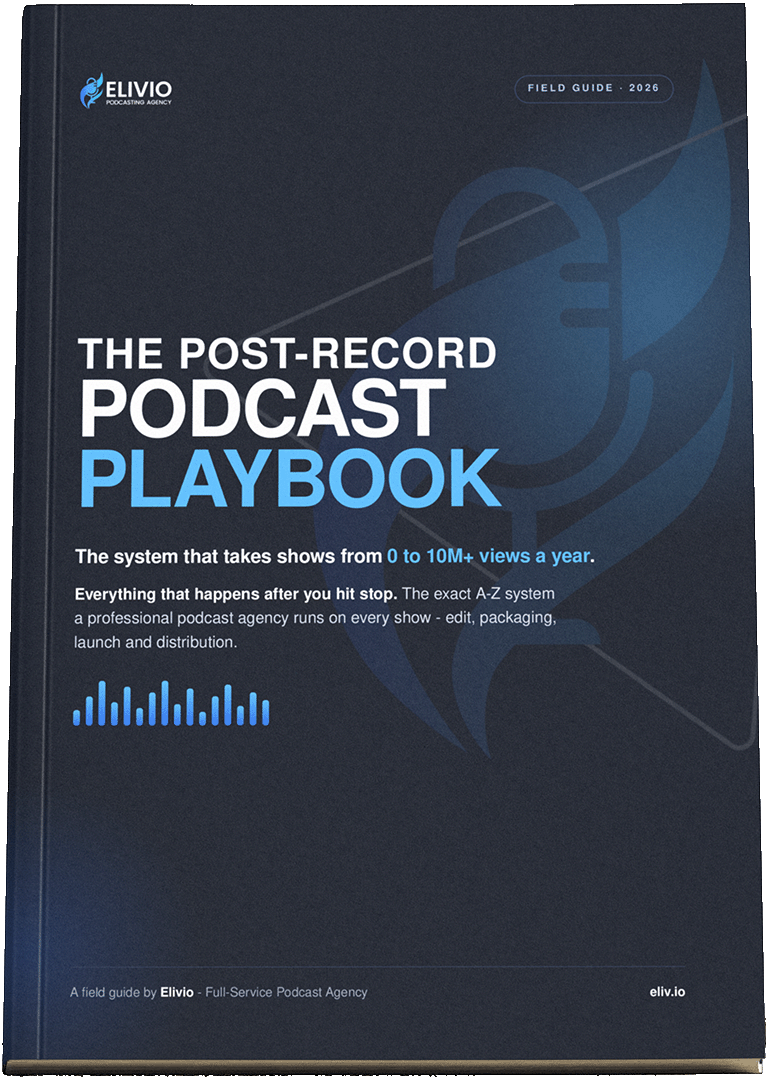
If you want the full system behind these steps, including the workflows we use on client shows, grab the free Post-Record Podcast Playbook. It is 22 pages on the system that takes shows from 0 to 10M+ views a year.
What growth looks like in practice
Chiflika is a Bulgarian agricultural podcast. When we started, it had no audience. Within 6 months it became the #1 agricultural podcast in Bulgaria.
We didn’t change the topic or the hosts. We handled the full podcast post-production: multicam editing, audio engineering, YouTube titles and thumbnails, Shorts for every episode, distribution across platforms and a consistent publishing rhythm. You can read the full breakdown in the Chiflika podcast case study.
The lesson I take from it: a niche show with a clear audience can lead its category if what happens after recording is done well and done every week.
How long does it take to grow podcast views?
Expect real movement in about 3 months of consistent posting, not 3 weeks.
The first month is usually about fixing the basics: hooks, thumbnails and audio. In the second month, Shorts start finding new people. By the third month, you have enough data to see which topics and formats pull viewers, and you can do more of what works. That is also the point where ads start to make sense.
Wrapping up
Low views rarely mean your podcast is bad. Usually the episode leaks viewers in the first minute, gets packaged in a way strangers skip, or lives in only one place.
Fix the first 30 seconds, the thumbnail and title, and the audio. Then add Shorts, a steady schedule and multi-platform distribution. Once something works organically, put a small ad budget behind it.
You hit record, and the rest decides whether anyone watches. If you want the step-by-step version of everything above, download the free Post-Record Podcast Playbook. You can also see how we work with shows at Elivio.
FAQ
How can I increase the viewers of my podcast quickly?
The fastest way to increase podcast viewers is to fix what already exists. Move the best moment of each episode into the first 30 seconds, make custom thumbnails with clear faces and short text, and cut 5 to 16 captioned Shorts from every episode. These changes help the views you already get turn into more watch time and reach.
Do Shorts really help grow a full-length podcast?
Yes. Shorts reach people who have never heard of your show, while full episodes mostly reach existing fans. HubSpot names short-form video as the highest-ROI format, and adding captions matters because 85% of people watch social video on mute. Each Short should hold one complete idea and point viewers toward the full episode.
Is YouTube the best platform for podcast growth?
For most shows, YouTube is the strongest starting point. It is the most-used podcast platform, with over 1 billion monthly podcast viewers, and it works as a search engine. Searchable titles, clear descriptions and custom thumbnails help new viewers find each episode long after it is published.
How often should I publish podcast episodes to grow?
Publish on a schedule you can keep for at least 6 months, usually weekly or every two weeks. About 90% of podcasts stop after episode 3, so consistency alone puts you ahead of most shows. A steady rhythm gives the algorithm and your audience a reason to keep coming back.
Should I run ads to increase podcast viewers?
Run ads only behind episodes or Shorts that already show good retention organically. Ads amplify content that works, so they won’t save a weak episode. Small Google or Meta campaigns aimed at your target audience can speed up growth once your hooks, thumbnails and audio are in good shape.